- Place
- Solana Ston
- Process
- Sea, sun & wind
- Pair it with
- Veliki Kaštio
Follow the water.
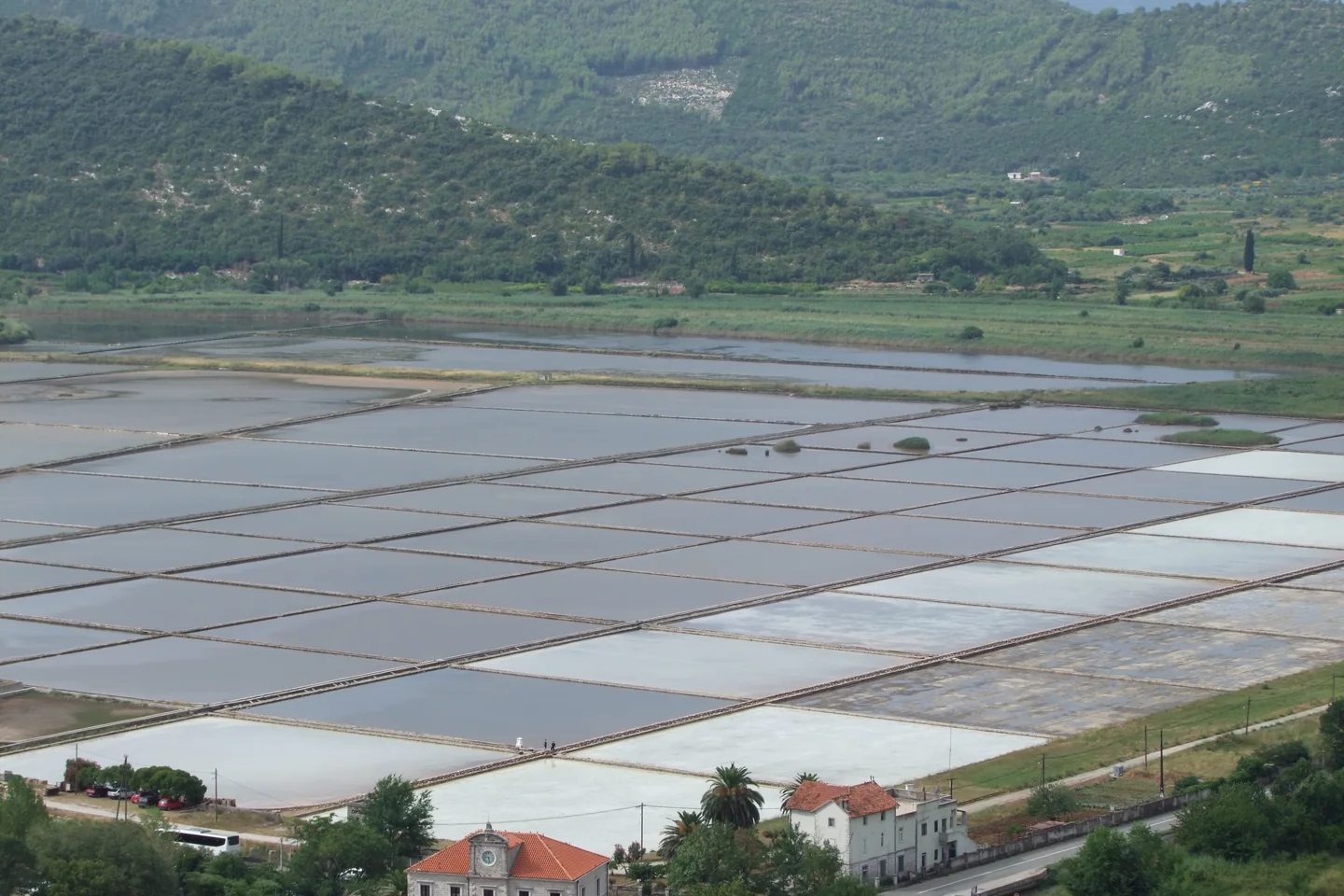
Solana Ston describes 58 pools arranged in five groups, with nine crystallisation pools. Seawater moves through a sequence of shallow basins; evaporation concentrates the brine before salt crystallises. The geometry you see from the walls is a working system.
Look for the relationship between pools, channels and embankments. Different surfaces need not mean different kinds of salt: the pools serve different stages of production. A guided explanation helps turn the view into an understanding of the process.
Why the view matters.
Salt production was economically important to the Dubrovnik Republic. The saltworks and fortifications belong in the same story: the pools help explain the investment in walls, and the walls reveal the scale of the landscape being protected.
A satisfying sequence is to see the pans from above, then return to their edge beside Ston. Add Veliki Kaštio to connect the productive landscape with the architecture around it.
Read the fortressesVisit a working place.
Solana Ston is at Pelješki put 1, beside the salt pans. The tourist board lists the reception details below. Contact reception for the day’s opening hours, admission and guided visits; harvesting follows the weather and cannot be guaranteed.
Allow around 45–60 minutes as an editorial planning estimate for a short visit; a guided programme may need longer. Confirm the programme first, then leave time for Ston’s streets rather than scheduling an immediate dash to your next stop.
- Ask which areas visitors may enter and stay on the designated paths.
- Check whether your chosen tour needs advance booking and which language it uses.
- Bring water and sun protection for the exposed setting.
Solana Ston · reception
Pelješki put 1, 20230 Ston
+385 20 754 017solana-ston@du.t-com.hrOpen in Maps ↗Ston Tourist Board · Ston Saltworks