- Ston
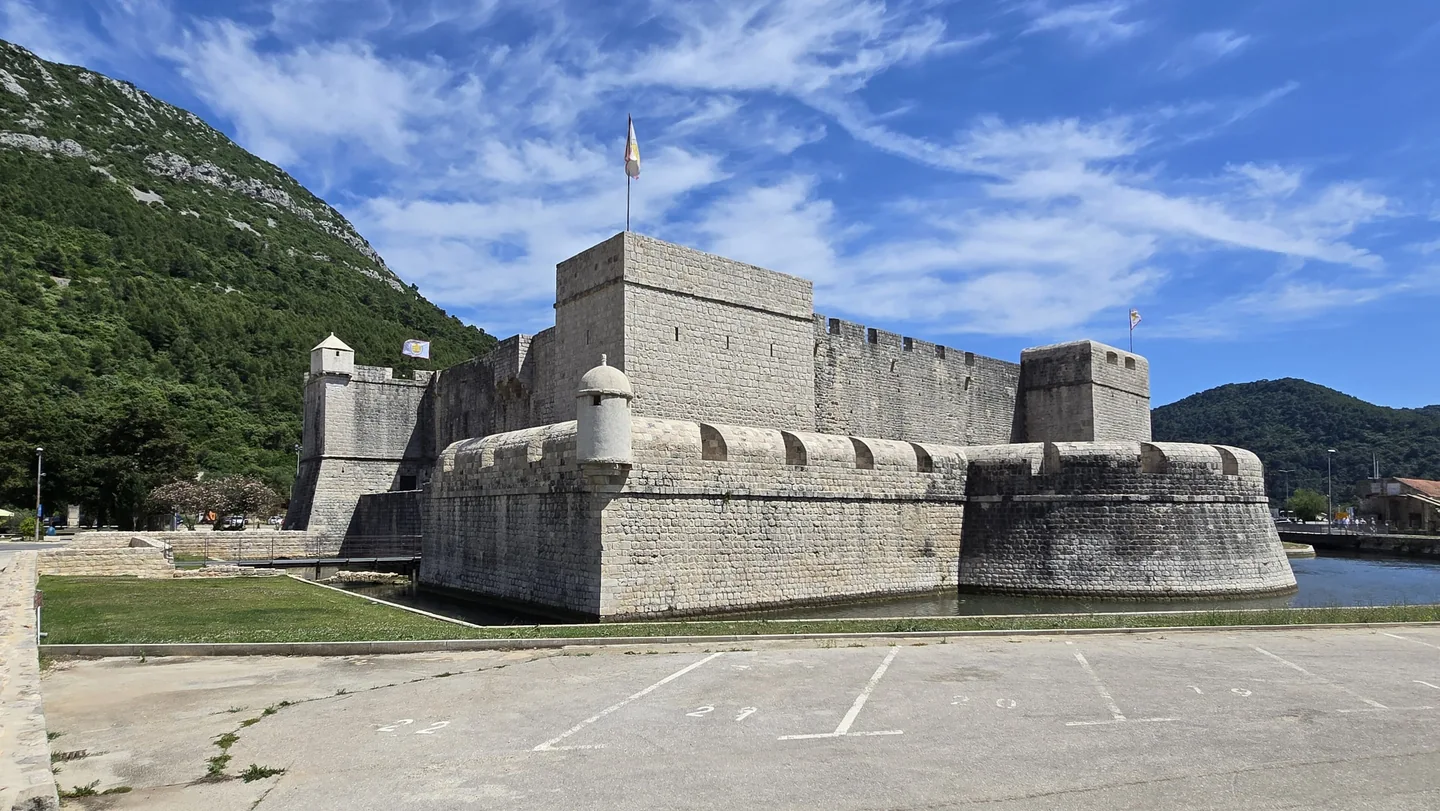
- Veliki Kaštio
- Mali Ston
- Koruna
- Above the towns
- Podzvizd
Veliki Kaštio: begin beside the salt.
The large fortress at Ston stands close to the salt pans. Its position makes the relationship between production, town and defence easy to understand: look from the building towards the pools, then back towards the hillside walls.
The official ticket shop currently includes Kaštio admission with the Ston walls ticket. Check its opening arrangements separately and keep your ticket. This is a useful first or final stop, especially if you want to understand the town before taking on the climb.
Follow the saltKoruna: the Mali Ston landmark.
Koruna is the principal fortress at Mali Ston. On the tourist board’s map it sits above the settlement, while the harbour and Toljevac tower are below. The relationship is easier to read if you pause at the waterfront and look back towards the hill.
Do not confuse reaching Mali Ston with guaranteed access to every part of Koruna. Ask the operator which fortress areas and wall connections are open for your visit. The town and harbour deserve time of their own.
Stay for Mali StonPodzvizd: understand the high ground.
Podzvizd occupies the hill above Ston. It completes the three-fortress picture described by DPDS: saltworks, two settlements and the high ground between them.
Treat the hilltop as a historical reference point, not an automatic extension to a standard wall ticket. Any separate uphill outing needs its own confirmed access, route and time allowance. A name on a map does not establish an open visitor path.
Look at the joins.
As you explore, compare where a wall meets a tower, how the stone changes and how the streets align below. These are prompts for looking closely, not a way to date masonry without specialist evidence.
The defences developed over centuries. Reading the three fortresses together gives a more useful picture than treating the entire complex as one uninterrupted monument built at a single moment.
The story